-
Any Questions teco.beautome@gmail.com
最后更新:
Hard Wax FAQ: 40 Questions Answered for Salons, Technicians, and Retail Brands
Forty practical hard wax questions answered for salons, technicians, distributors, and retail brands—from formulation and temperature to OEM buying.
 ByTeco
Hard wax performance depends on the finished formula, heater conditions, film thickness, hair type, treatment area, and technician technique. That is why one universal temperature, set time, or application method cannot describe every product.
This hard wax FAQ answers 40 common questions from salons, technicians, distributors, and retail brands. It also explains which claims can be verified from documentation and which require testing with the finished product.
Ingredients and Formulation
1. What makes rosin-free hard wax different?
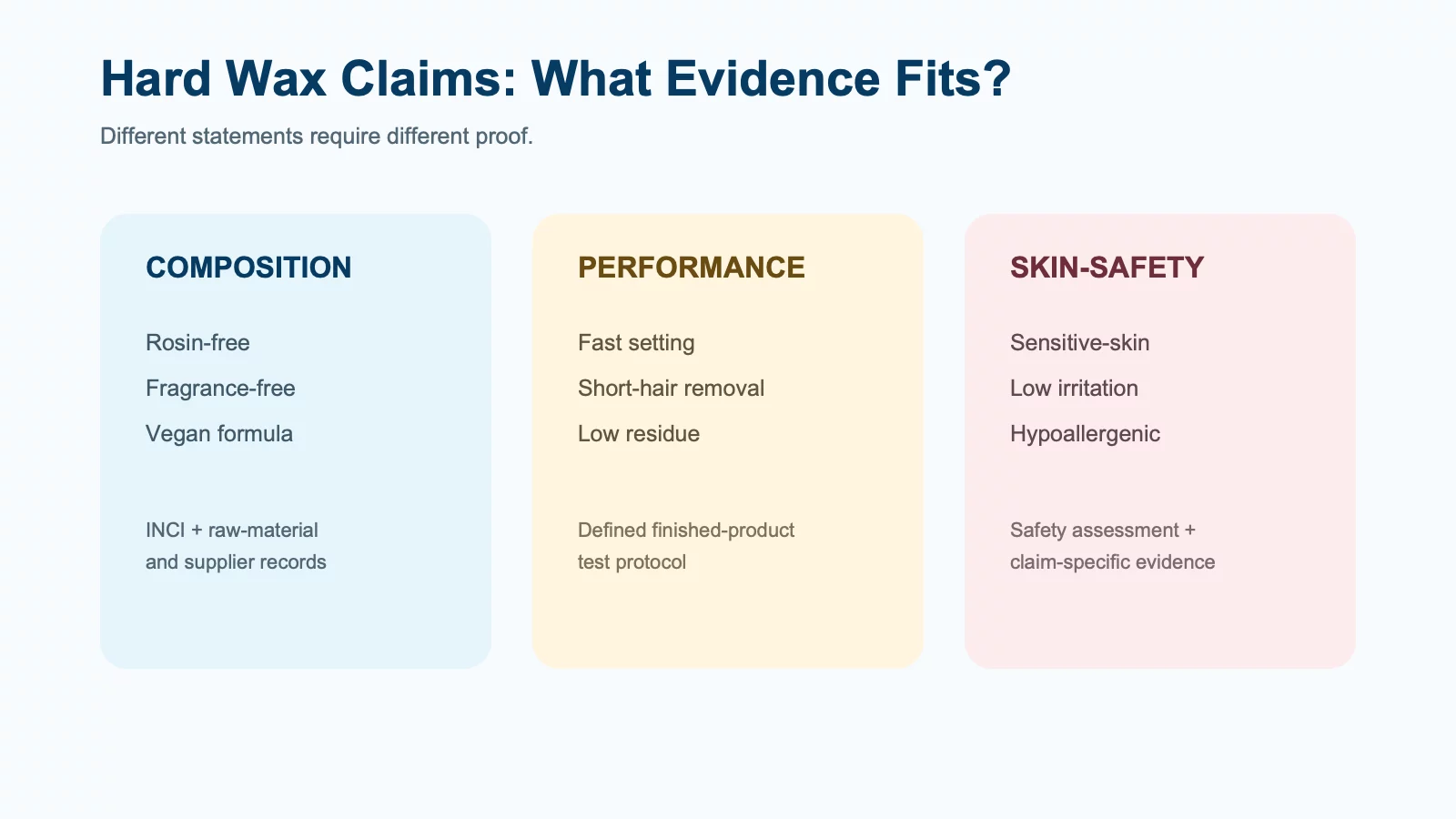
It excludes rosin or colophony-based tackifiers and uses an alternative resin-and-polymer system to build adhesion and film strength. Rosin-free is a composition claim, not an automatic guarantee of comfort or allergy prevention.
2. Is rosin-free wax hypoallergenic?
No formula can guarantee that every user will avoid allergy or irritation. Rosin-free removes one recognized source of sensitization, while fragrance, colorants, botanicals, and other ingredients still require assessment.
3. What polymers are used in hard wax?
Formulas may use hydrocarbon resins, copolymers, waxes, and plasticizing materials in different combinations. Buyers should evaluate the complete INCI, supplier documentation, and finished performance rather than ranking one ingredient name in isolation.
4. What does each ingredient group do?
Tackifier systems help grip hair; film-forming polymers provide cohesion; waxes and plasticizers tune flow, set time, and flexibility; pigments, fragrance, and conditioning materials shape appearance and positioning.
5. Is hard wax vegan or cruelty-free?
Only when the finished formula, raw-material origins, processing aids, and supplier policy support those claims. Request written documentation and confirm destination-market labeling requirements.
Melting and Working Temperature
6. What temperature should hard wax be heated to?
Follow the wax manufacturer’s instructions. Melt fully, mix thoroughly, and reduce heat until the wax forms the intended application ribbon. Verify temperature before skin contact.
7. Is low-temperature hard wax safer?
A lower working temperature may improve comfort, but it does not eliminate burn or irritation risk. Heater accuracy, mixing, film thickness, technique, and individual skin response also matter.
8. Can hard wax be used in any wax heater?
Use a heater with suitable capacity, pot geometry, control range, stability, and manufacturer instructions. Validate the intended wax load because the display may not equal the full wax temperature.
9. What controls melt time?
Wax mass, pellet size, starting temperature, formulation, heater power, pot contact, lid, insulation, and mixing all affect melt time. Compare products under the same defined test.
10. Can wax be held warm all day?
Follow the supplier’s maximum holding and reheating guidance. Extended heat exposure can change odor, color, viscosity, and film behavior, especially when residue accumulates around the pot.
Application and Technique
11. How thick should hard wax be applied?
Use the formula’s recommended thickness and build a defined edge or lift tab. A film that is too thin may crack; one that is too thick may set slowly and waste product.
12. How long should hard wax take to set?
Set time varies with formula, temperature, film thickness, body area, and room conditions. Remove when the film is cohesive and flexible according to the product instructions—not by a universal number of seconds.
13. Can hard wax remove short hair?
Performance depends on hair length, diameter, growth direction, formula wetting, and technique. Brands should define the shortest claimed hair length and validate it with a controlled protocol.
14. Can one formula remove coarse and fine hair?
Some versatile formulas can, but application strategy may change. A portfolio may also use separate facial and coarse-hair formulas when channel needs justify the complexity.
15. Why does removal direction matter?
Application and removal relative to hair growth affect capture, breakage, and skin stress. Follow the product’s professional protocol and keep removal controlled and close to the skin.
Body Areas and User Suitability
16. Is hard wax suitable for Brazilian waxing?
Many professional hard waxes are designed for coarse hair and sensitive areas, but the formula, instructions, technician training, and contraindications must support that use.
17. Can hard wax be used on underarms?
Yes, when the product is intended for that area and the skin is suitable for waxing. Clean preparation, correct temperature, hair-direction mapping, and controlled passes are important.
18. Can hard wax be used on the face?
Use only a formula and protocol intended for facial areas. Review medications, active skincare, recent treatments, compromised skin, and other contraindications before service.
19. Is hard wax suitable for men’s grooming?
It can be, but dense or coarse hair may require smaller sections, adequate film strength, and a suitable working time. Validate chest, back, facial, and intimate-area protocols separately.
20. Is fragrance-free hard wax available?
Yes. Fragrance-free and rosin-free are separate specifications. Confirm the complete formula and claim policy rather than assuming a low-odor wax contains no fragrance.
Performance and Texture
21. Does hard wax stick only to hair?
Hard wax is designed to grip hair while forming a removable film, but it still contacts the skin. Formula, temperature, preparation, film thickness, and removal timing affect skin adhesion.
22. What causes stringy wax?
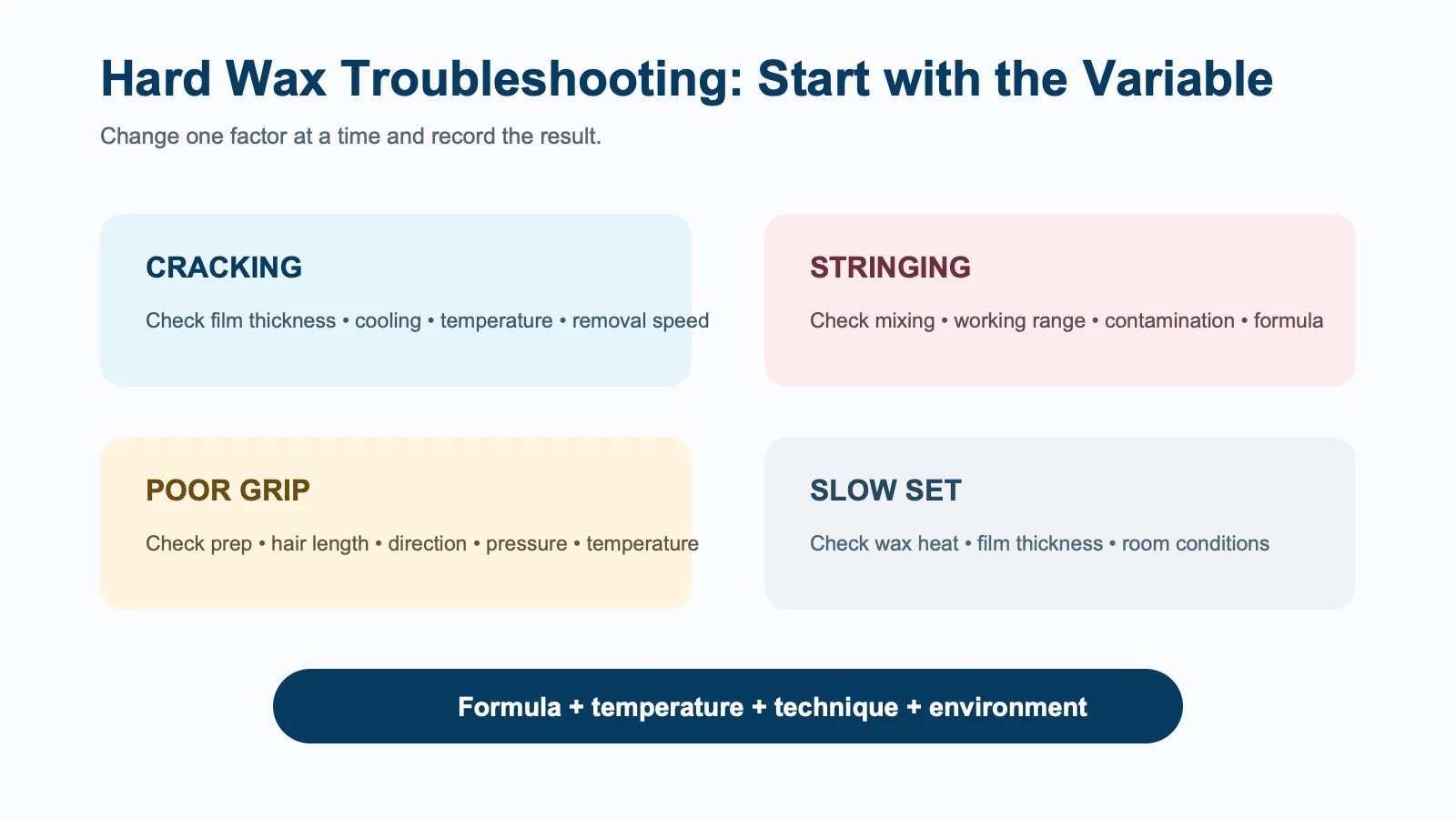
Temperature, incomplete melting, formula rheology, contamination, and cooling during application can all contribute. Mix, stabilize, and test within the supplier’s working range.
23. What prevents hard wax from breaking?
Balanced cohesion and flexibility help, but technique still matters. Thin application, excessive cooling, slow removal, or an unsuitable formula can produce fractures.
24. Should hard wax leave zero residue?
Clean removal is a useful target, not a universal guarantee. Evaluate residue under defined temperatures, set times, film thicknesses, body areas, and repeated heating cycles.
25. Does humidity affect hard wax?
Room temperature, humidity, perspiration, and skin preparation may affect set time and grip. Brands serving hot or humid markets should include those conditions in validation.
Skin Safety and Claims
26. Can people with sensitive skin use hard wax?
Some formulas are positioned for sensitive skin, but individual suitability cannot be guaranteed. Review the full formula, contraindications, technique, temperature, and product-specific safety evidence.
27. Is redness after waxing normal?
Temporary redness can occur, but severity and duration vary. Persistent, severe, blistering, or spreading reactions require appropriate professional or medical attention.
28. Can hard wax be used on acne-prone or reactive skin?
Avoid active lesions, damaged skin, and contraindicated treatments. The service provider should follow product guidance and a professional consultation protocol.
29. Is patch testing necessary?
Follow the product instructions and local professional requirements. A patch test cannot predict every reaction, and it does not replace ingredient review or appropriate service screening.
30. What does “free from harsh chemicals” mean?
It is vague and should be avoided. Name the excluded ingredient precisely—such as rosin or added fragrance—and support the statement with formula documentation.
OEM and Private-Label Customization
31. Can color and fragrance be customized?
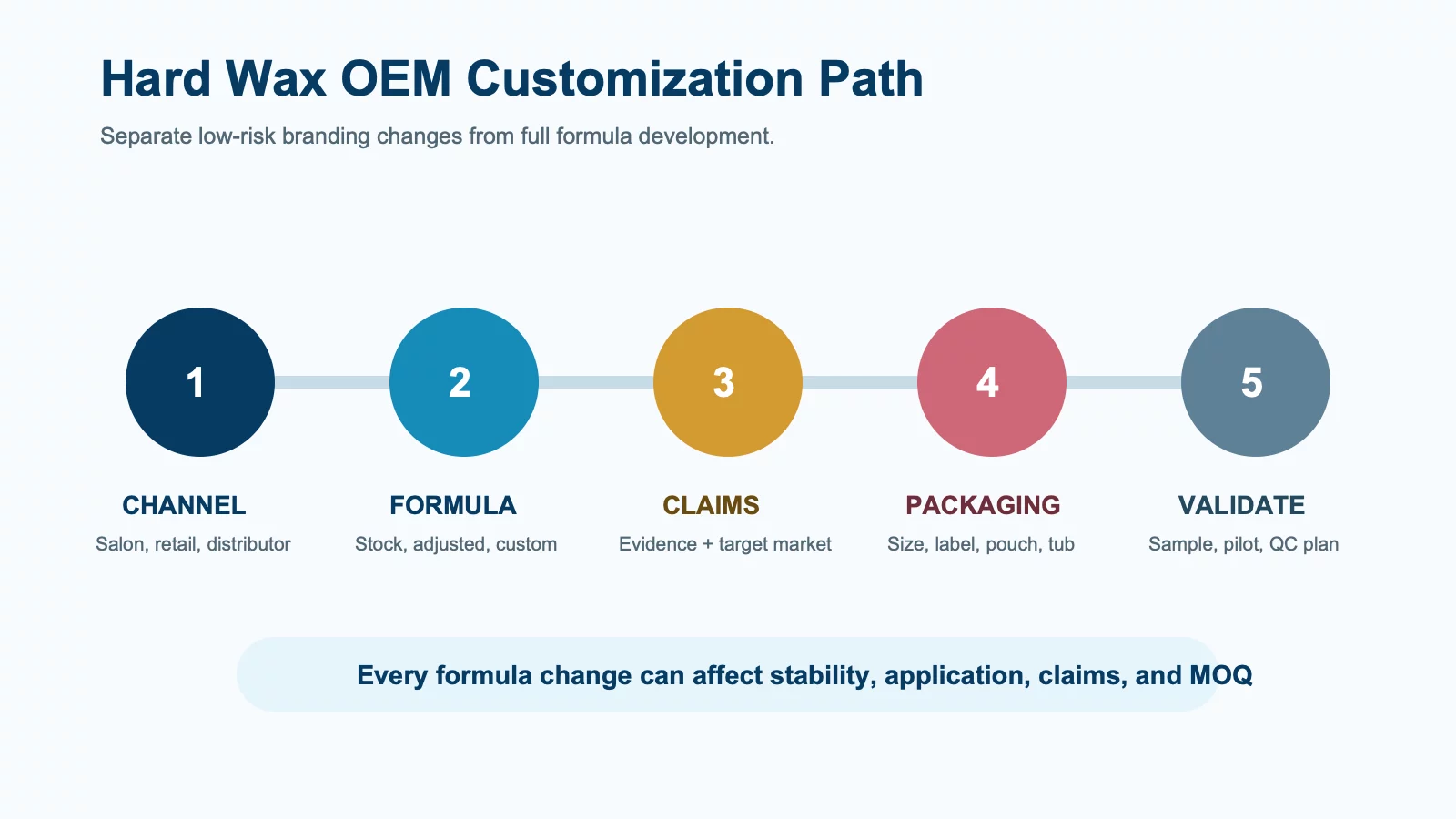
Often yes, subject to formula compatibility, stability, minimum order, target-market rules, and available raw materials. Every change should be revalidated in the finished formula.
32. Can viscosity and working time be adjusted?
They can be development targets, but changing one property can affect adhesion, film strength, set time, residue, and temperature window. Approve performance as a complete system.
33. Can set speed be customized?
Yes, within formulation and use constraints. Define the test temperature, film thickness, room condition, and readiness endpoint before requesting “fast-setting” performance.
34. Can packaging be customized?
Common options include bag size, label, printed pouch, tub, carton, and master case. Packaging must be compatible with the formula and validated for filling, sealing, storage, and shipping.
35. What determines MOQ?
Formula changes, pigment or fragrance minimums, packaging print method, component sourcing, production line setup, and testing scope all influence MOQ. Ask for separate thresholds for stock formula, custom color, and full custom development.
Troubleshooting
36. Why is hard wax cracking?
Common causes include a film that is too thin, excessive cooling, low application temperature, brittle formula behavior, or slow removal. Change one variable at a time.
37. Why is hard wax stringy?
It may be too cool, incompletely mixed, contaminated, or naturally more elastic. Confirm the validated working consistency before adjusting the heater.
38. Why is wax not gripping hair?
Check hair length, skin preparation, perspiration, application direction, wax temperature, pressure, and formula fit. Do not assume higher temperature will solve poor adhesion.
39. Why is the wax setting too slowly?
It may be too hot, too thick, or used in a warm environment. Reduce heat within instructions, adjust film thickness, and standardize room conditions.
40. Why is the wax too thick or too runny?
Viscosity reflects both formula and temperature. Mix fully, allow the load to stabilize, verify the working range, and investigate contamination or aging if behavior remains abnormal.
Choose Hard Wax with Evidence, Not One-Line Claims
Review BeauTome’s rosin-free hard wax, the formulation science guide, and the 2026 hard wax buyer guide. The broader hard wax range can help you map formulas to channels and service areas.
Build a Hard Wax Brief for Your Brand
Share your target market, service areas, fragrance policy, working behavior, pack format, and claim priorities with BeauTome.