-
Any Questions teco.beautome@gmail.com
最后更新:
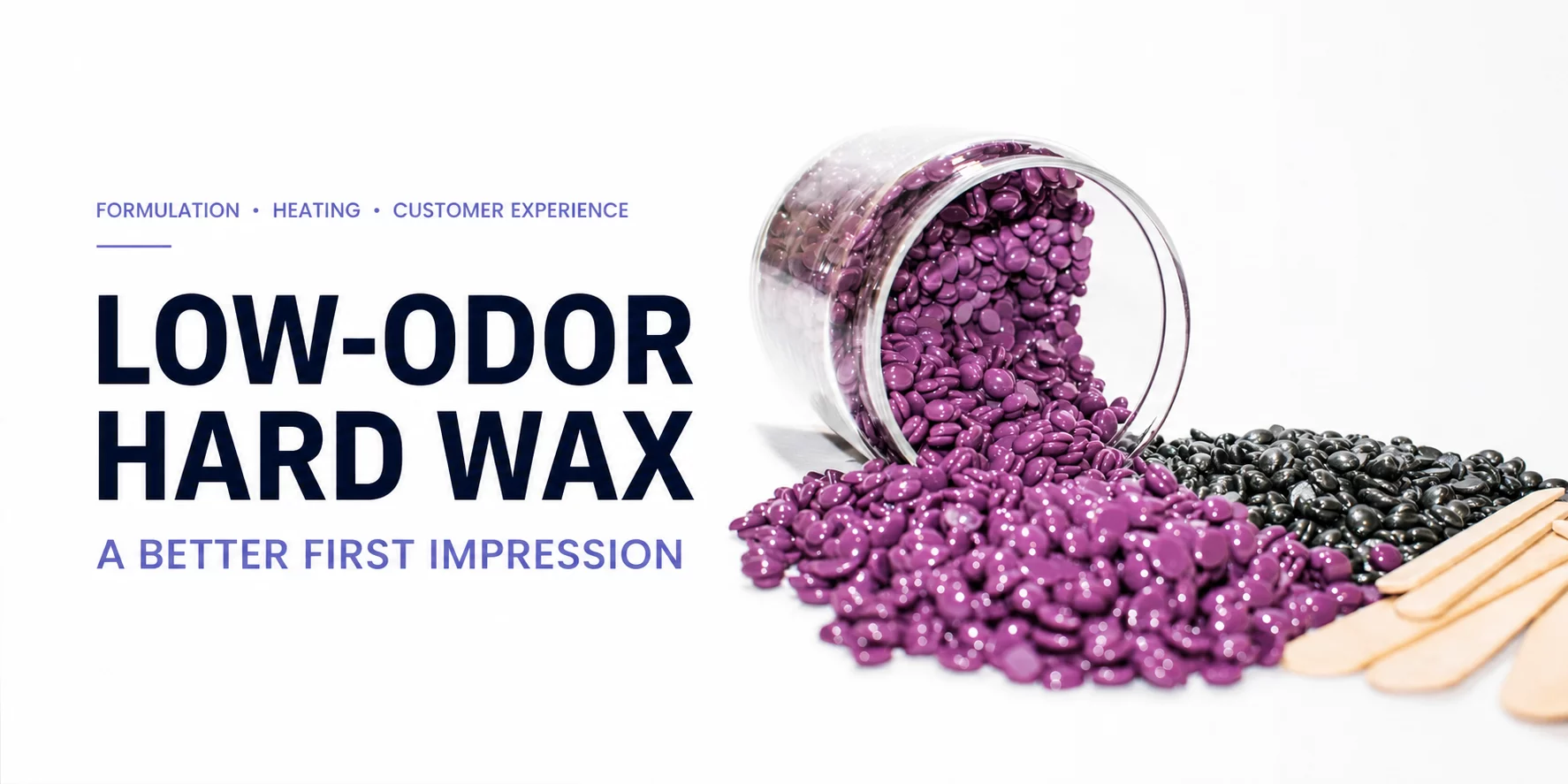
First Impressions Matter: Why Low-Odor Hard Wax Heating Wins Customers
Learn why heated hard wax odor depends on formulation, temperature, residue, and room conditions—and how brands can test and claim a low-odor experience.
 ByTeco
Clients notice a waxing room before they evaluate technique. A strong burnt, resinous, perfumed, or stale odor can shape expectations about cleanliness and comfort within seconds. For salons and beauty brands, the sensory experience of heated hard wax is therefore a real product-design and service consideration.
However, “no chemical smell” needs careful wording. Odor is not a laboratory safety test, and the absence of a noticeable smell does not prove zero emissions, zero allergens, or zero irritation. The useful business question is narrower: how can a brand design and validate a more neutral, consistent heating experience?
Why Heated Wax Odor Influences First Impressions
Smell is immediate and subjective. One client may interpret a resinous odor as normal, while another associates it with overheating or harsh ingredients. Public-health guidance also notes that people vary widely in odor sensitivity and that unpleasant odors can affect comfort or quality of life even when they are not a reliable measure of toxicological risk.
In a premium salon, a neutral and consistent room profile supports the same signals as clean tools, organized workstations, and clear consultation: process control and attention to detail. It can also reduce the need to mask wax odor with heavy room fragrance, which introduces another sensory variable.
Where Waxing-Room Odors Actually Come From
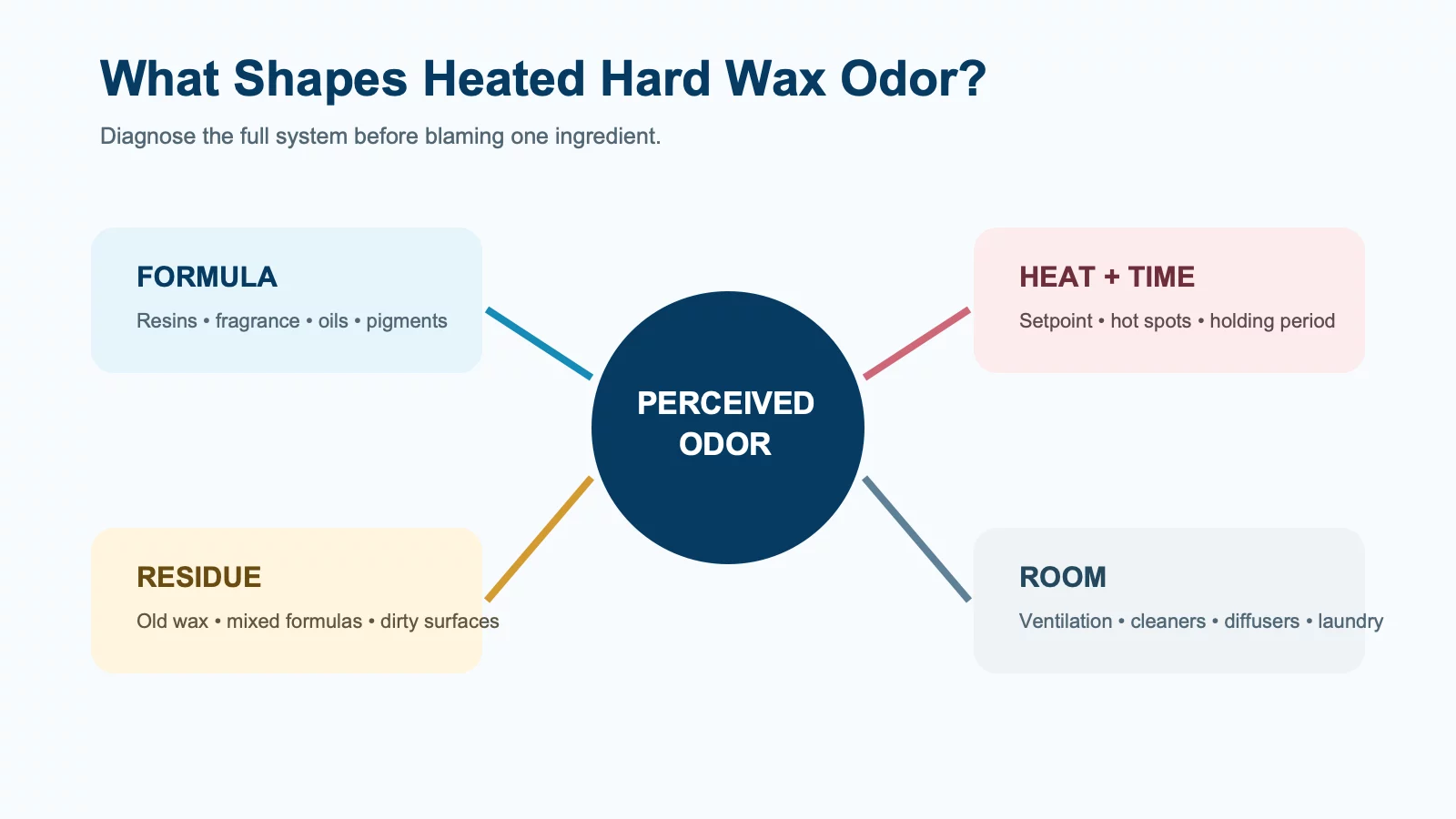
The hard wax formula
Resins, polymers, waxes, oils, pigments, fragrance, and botanical ingredients each have an odor profile. Rosin and modified rosin materials can contribute a characteristic resinous note, but synthetic-resin systems are not automatically odorless. The complete formula and raw-material quality determine the result.
Temperature and time
Heating changes volatility and can accelerate oxidation or degradation when a product is held too hot or for too long. Wax close to the pot wall may experience a different thermal history from wax in the center. A heater setpoint alone cannot describe this.
Residue and cross-contamination
Old wax on the rim, pot, lid, spatula rest, or heater base can generate an odor that is wrongly blamed on a fresh batch. Mixing fragrances or formulas in one pot also makes sensory evaluation unreliable.
The surrounding environment
Cleaning agents, disinfectants, laundry products, candles, diffusers, ventilation, and nearby treatments all contribute to perceived room odor. A salon should diagnose the complete environment before changing wax.
Rosin-Free Can Change the Odor Profile—But It Is Not a Guarantee
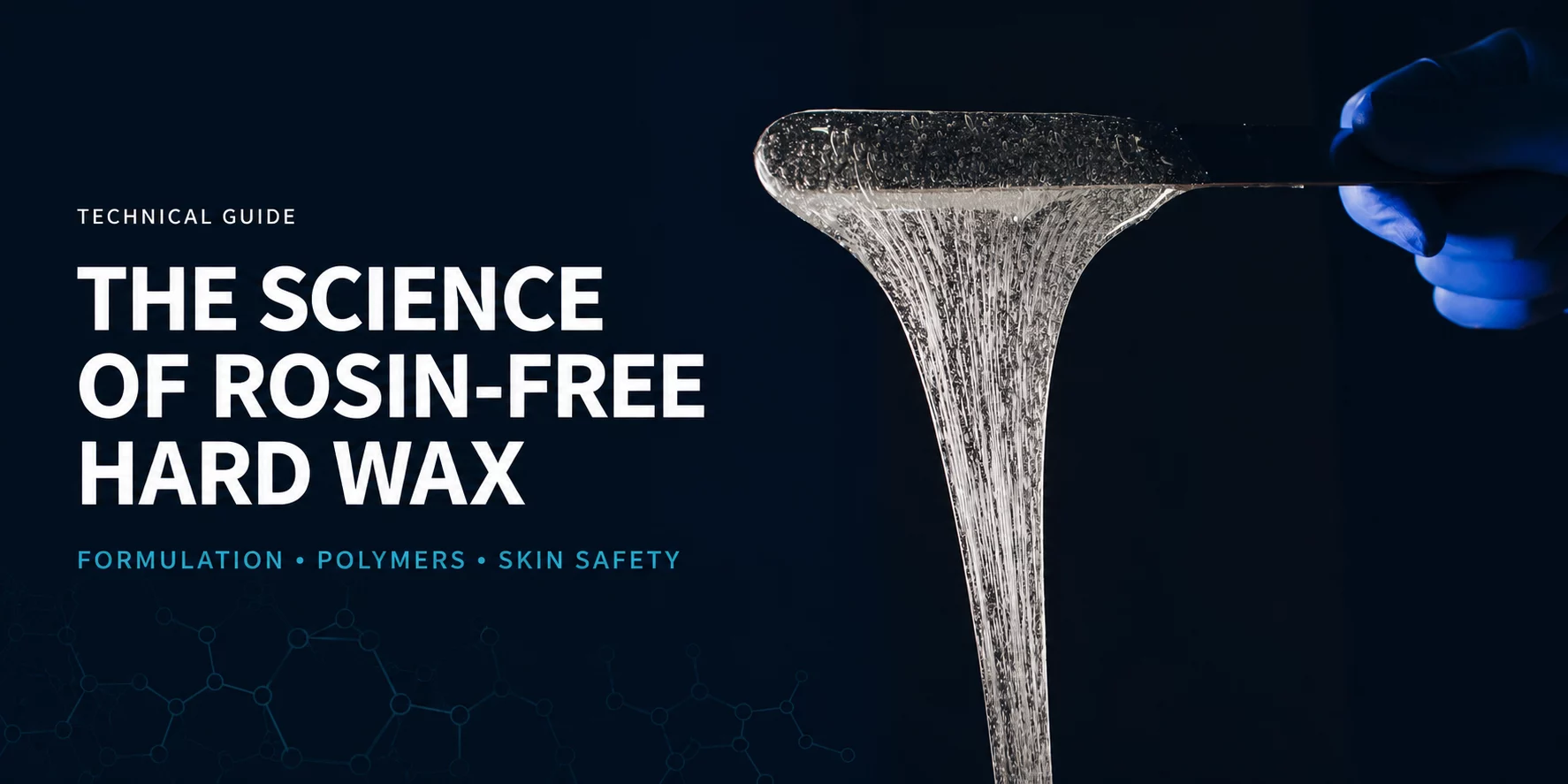
Rosin-free hard wax excludes rosin or colophony-based tackifiers and rebuilds adhesion with alternative resin and polymer systems. This can support a different, often more neutral formulation direction, particularly when combined with a fragrance-free brief and controlled raw materials.
Still, three claims must remain separate:
- Rosin-free: a compositional claim verified through INCI and supplier documentation.
- Fragrance-free: a finished-formula claim that must also consider fragrancing ingredients and masking materials.
- Low-odor during heating: a sensory-performance claim that needs a defined test protocol.
None of these statements, alone, proves “hypoallergenic,” better indoor air quality, or absence of volatile compounds. As the US EPA has explained more broadly, the presence or absence of an odor is not a sufficient indicator of health risk; exposure assessment requires appropriate measurement and toxicological context.
Why Overheating Is Often the Real Sensory Problem
A formula developed for controlled application can smell different when left at an excessive temperature for hours. Overheating may also change color, viscosity, elasticity, and residue behavior. For salons, the solution is not simply to select the lowest possible heater number. The wax must first melt fully and then be held within its validated working range.
Brands should pair wax development with a realistic heater protocol: defined load, lid condition, mixing interval, melt phase, holding phase, and maximum use duration. This turns “low odor” from a subjective impression into a repeatable product requirement.
How to Test Heating Odor Before Approving a Formula
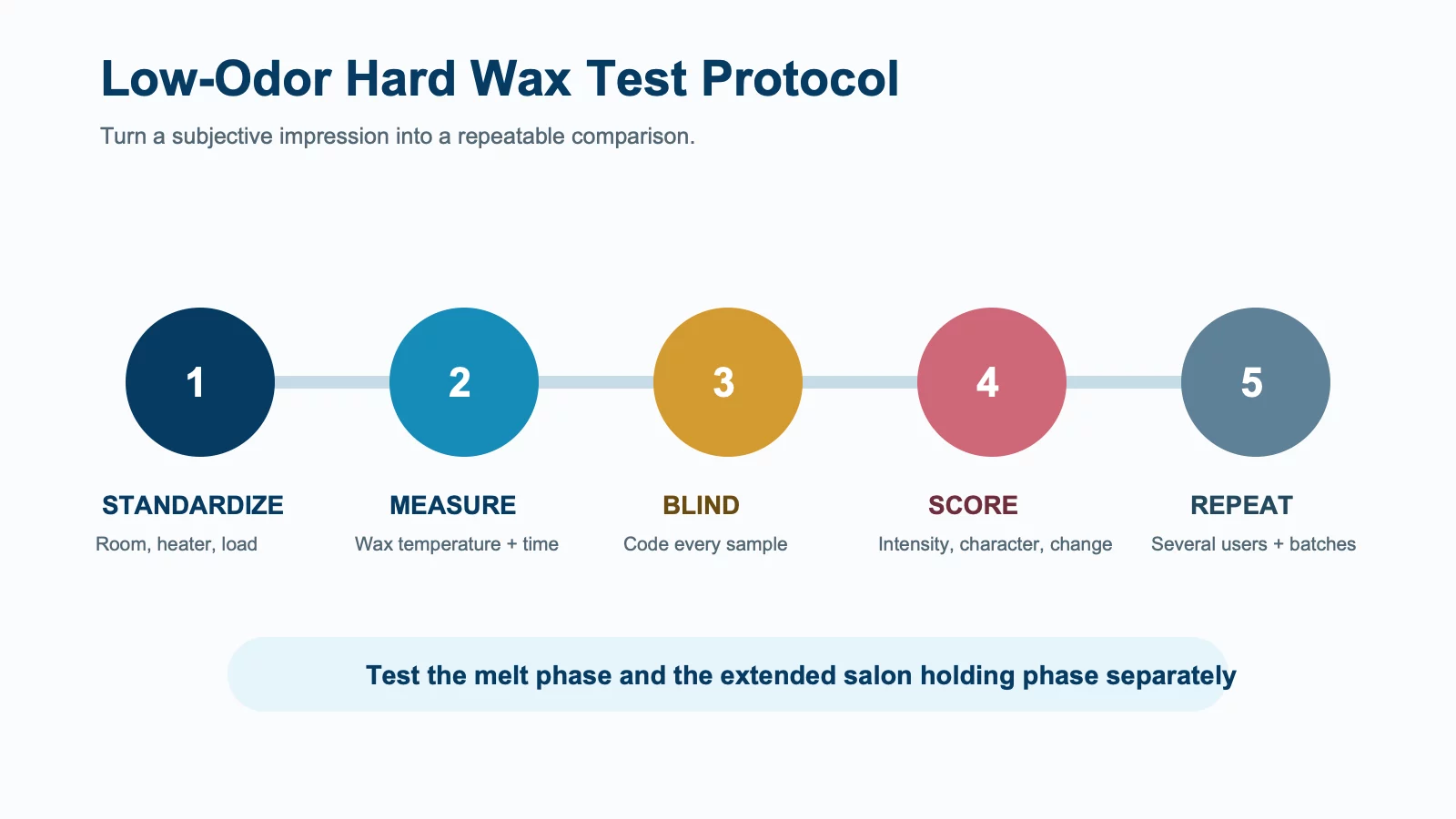
1. Standardize the equipment and room
Use the same clean heater, pot, wax mass, room volume, ventilation condition, and preparation time. Remove diffusers, candles, scented cleaners, and unrelated products from the test area.
2. Separate the melt phase from the hold phase
Score odor during initial melting, after stabilization, and after an extended salon-style hold. Record actual wax temperature where possible, not only the heater setting.
3. Use blinded, repeatable scoring
Code the samples and ask several evaluators to rate intensity, character, acceptability, and change over time. A single person’s “odorless” judgment is not sufficient for a commercial claim.
4. Track other changes at the same time
Record color, surface skinning, stringing, spread, set time, film integrity, and residue. Odor change may be an early signal of poor thermal control or aging, even when it is not a safety measurement.
Better Claims for Brands and Salons
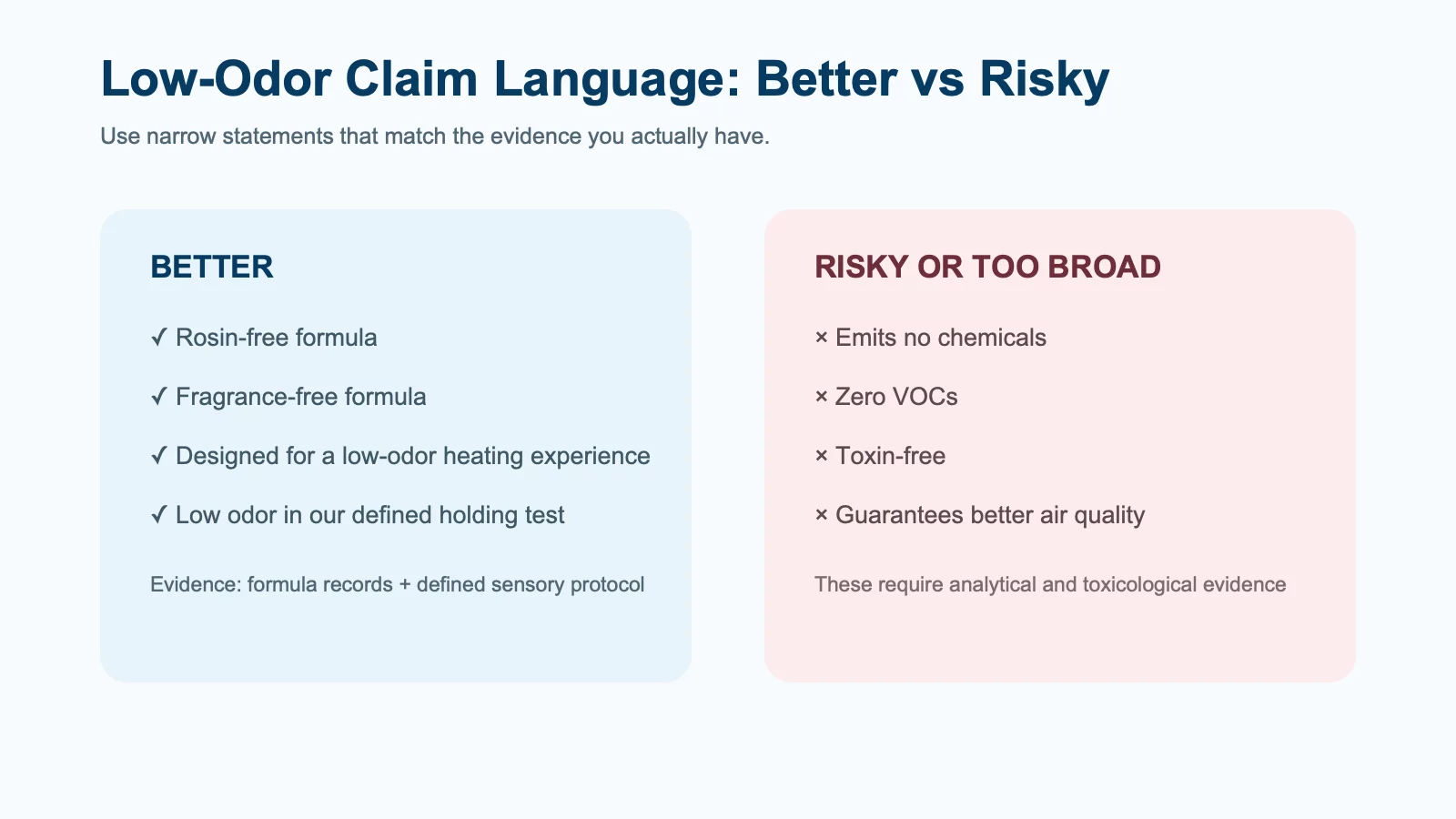
Credible language is specific and tied to the test. “Designed for a low-odor heating experience” is more defensible than “emits no chemicals.” “Fragrance-free formula” is clearer than “toxin-free.” “Rosin-free” should be supported by formula and raw-material documentation, not inferred from smell.
For salon communication, staff can say: “We use a rosin-free formula and follow a controlled heating protocol to maintain a more neutral treatment-room experience.” This explains the service choice without diagnosing allergies or promising a medical outcome.
A Low-Odor Experience Is a System, Not One Ingredient
- Formula: define rosin, fragrance, color, and botanical requirements.
- Raw materials: control odor, color, and variation through specifications and change management.
- Heater: validate the intended wax load and working range.
- Salon protocol: avoid overheating, contamination, and old residue.
- Environment: manage ventilation and competing fragrances.
- Claims: match each statement to appropriate evidence.
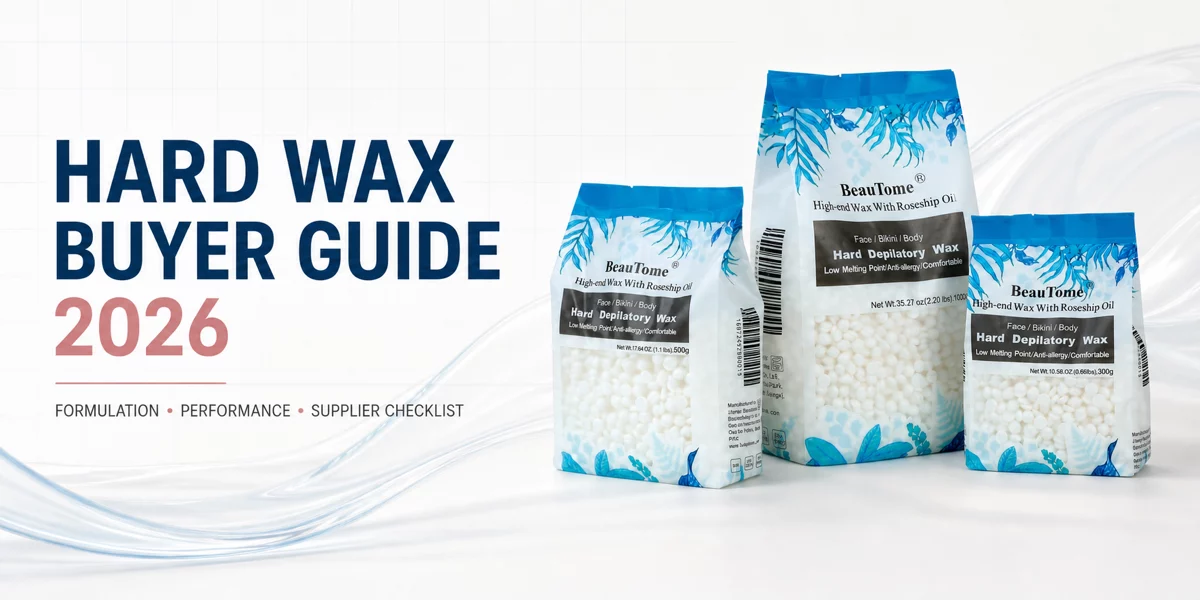
Brands can review BeauTome’s rosin-free hard wax, learn more about the science of rosin-free formulation, and compare development criteria in the 2026 hard wax buyer guide. Heater control is covered separately in the wax heater engineering guide.
Final Perspective
A neutral heating experience can strengthen first impressions, but the most trustworthy brands do not turn sensory comfort into an unsupported safety promise. They control formulation, temperature, time, cleanliness, and claim language as one system.
Develop a Rosin-Free, Low-Odor Hard Wax Brief
Tell BeauTome your target channel, fragrance policy, heater workflow, packaging, and market requirements. We can help define the sample, sensory test, and OEM/ODM production plan.