
-
Any Questions teco.beautome@gmail.com
最后更新:2026-10-05
Low-Melting Rosin-Free Hard Wax: A1 for Facial and Bikini Waxing
Explore A1 rosin-free hard wax, its 48–50°C melting range, and what beauty brands should check before choosing a formula for facial and bikini waxing.
 ByTeco
Published October 5, 2026 · By Teco · Product focus: BeauTome A1
BeauTome A1 is an unscented, rosin-free hard wax with a supplier-specified melting range of 48–50°C, developed for professional waxing, including facial and bikini-area services. Its appeal to beauty brands and salon buyers is a defined low-melting formulation, smooth thin application and a quick-forming film. The melting range describes the product; it does not prescribe the temperature at which wax should touch a client’s skin.
For a brand building a sensitive-area waxing range, A1 is a product to evaluate against a clear service brief: the treatment area, hair type, operator technique and finished-formula documentation. Below, we explain its specifications, the temperature distinctions that matter in practice, and how to position it accurately for professional customers.
A1 rosin-free hard wax at a glance
| Product detail | Current A1 information | What it means for the buyer |
|---|---|---|
| Formula positioning | Rosin-free; unscented | A clear starting point for an ingredient and fragrance brief. Check the complete formula for each selected variant. |
| Melting range | 48–50°C (118–122°F), supplier-specified | A formulation parameter to confirm in the technical specification; not a universal heater setting or skin-contact temperature. |
| Application | Smooth, thin spreading | Evaluate film coverage and removal in the intended service, rather than assuming that a thinner layer always works better. |
| Film formation | Approximately 6–8 seconds, according to current product information | A starting reference. Layer thickness, room conditions and technique can change the working window. |
| Intended service focus | Professional face, bikini and other body-area waxing; fine and coarse hair | Confirm the exact area and client suitability against the final instructions and salon assessment. |
| Supply formats | 100 g, 300 g, 500 g and 1,000 g; gold, pink and clear white options | Match the selected formula, colour and pack to the approved sample and final label. |
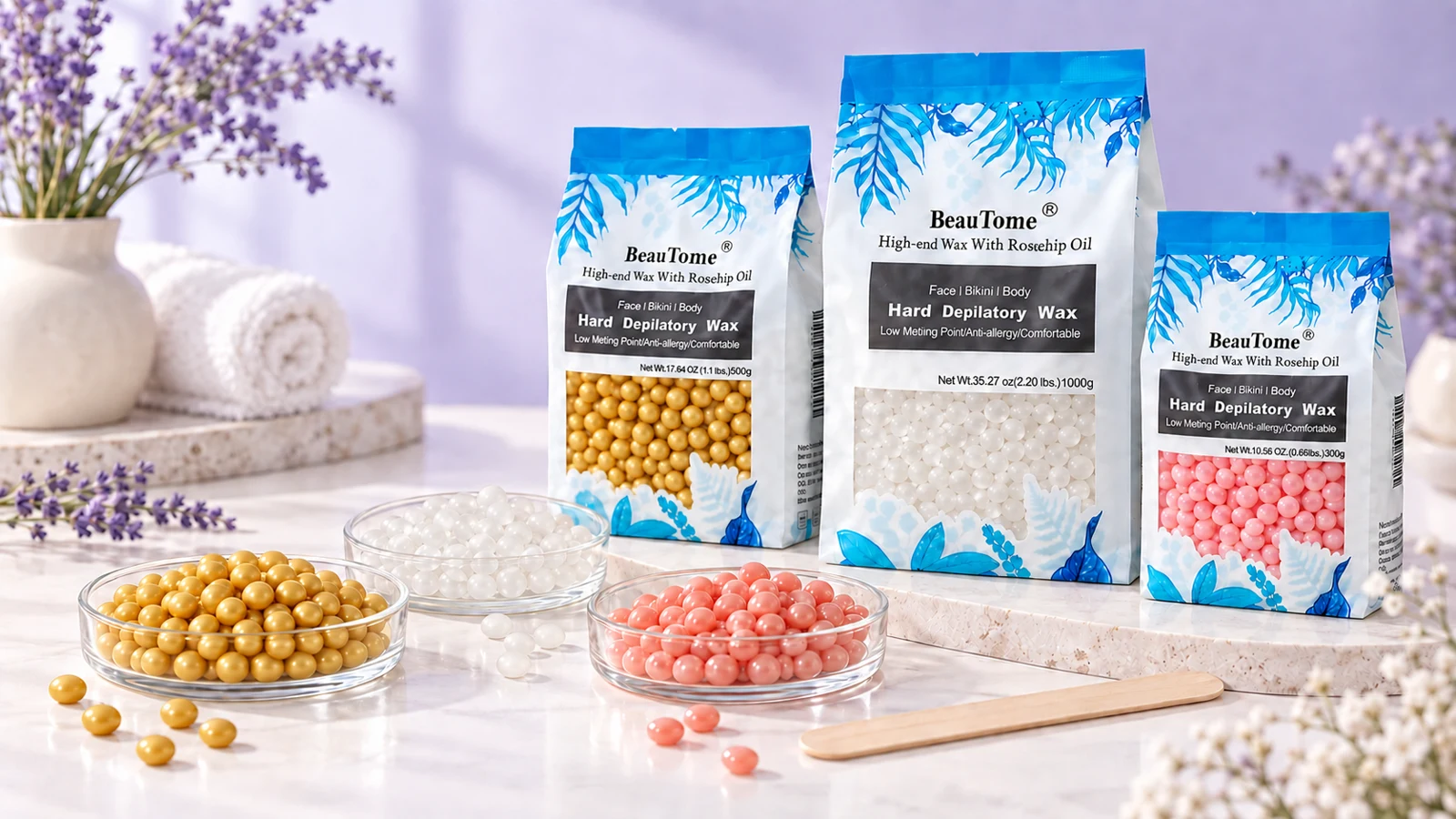
These are BeauTome’s current product specifications and positioning, not independent clinical test results. Request the current technical sheet and instructions for the exact A1 variant you intend to purchase. See the rosin-free hard wax product page for the product family.
What does a 48–50°C melting range actually mean?
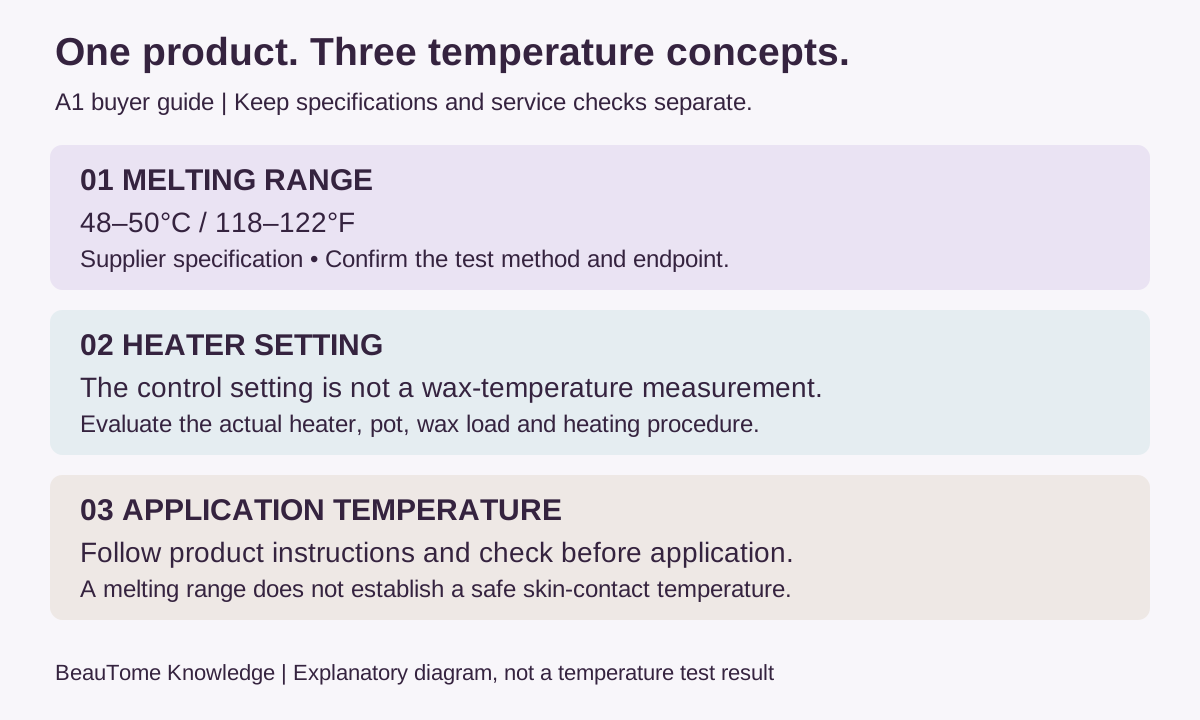
A melting range tells a buyer about the wax formulation’s transition on heating. It does not tell an operator to set every heater to 48–50°C or apply wax directly at that temperature. A useful product specification separates three different temperatures.
1. The formulation’s melting range
A1’s current supplier-specified range is 48–50°C. When comparing samples, ask which method and endpoint the supplier uses to determine melting behaviour. A declared melting point and a practical spreading consistency are different observations; a fair comparison requires the same definitions.
2. The heater setting and actual wax temperature
The number selected on a heater is a control setting. Actual wax temperature depends on the equipment, wax load, pot and heating procedure. Record both the setting and a suitable measured wax temperature during sample evaluation. Our wax heater engineering guide explains why temperature stability and measurement location matter.
3. The temperature at application
Wax changes temperature between the pot, applicator and skin. Follow the product’s validated instructions and the salon’s temperature-check procedure before application. The American Academy of Dermatology advises following package directions and checking wax temperature before use; excessively hot wax can burn. A lower melting specification does not remove that risk. AAD waxing guidance.
Why consider A1 for facial and bikini-area waxing?
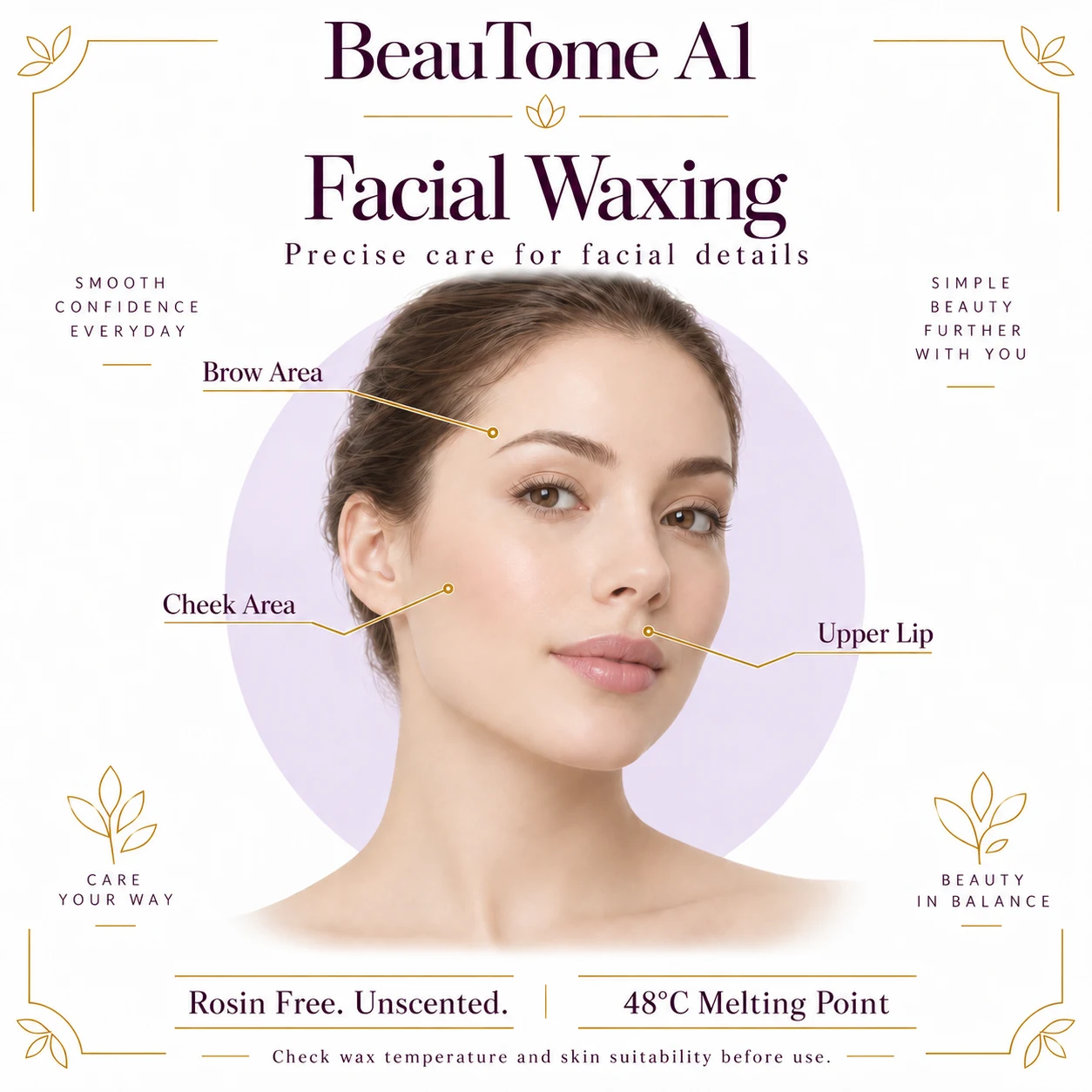
A1 combines a rosin-free, unscented formulation with thin spreading and a quick-forming film. For professional buyers, these features create a specific evaluation brief: controlled application on smaller treatment areas, workable film removal, and a formula that fits the brand’s ingredient requirements.
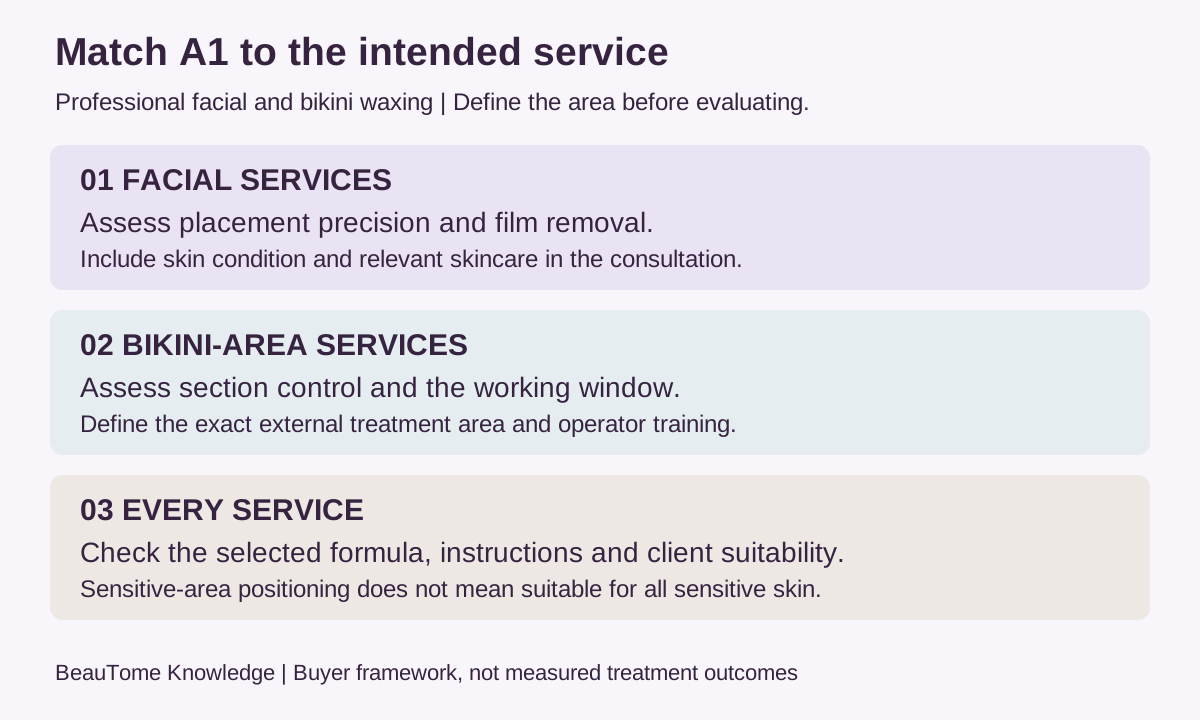
Facial waxing: assess precise placement, film integrity and removal on the intended facial area. The consultation must include current skin condition and relevant skincare or medication use. A product intended for the face is not automatically appropriate for every client or every facial zone.
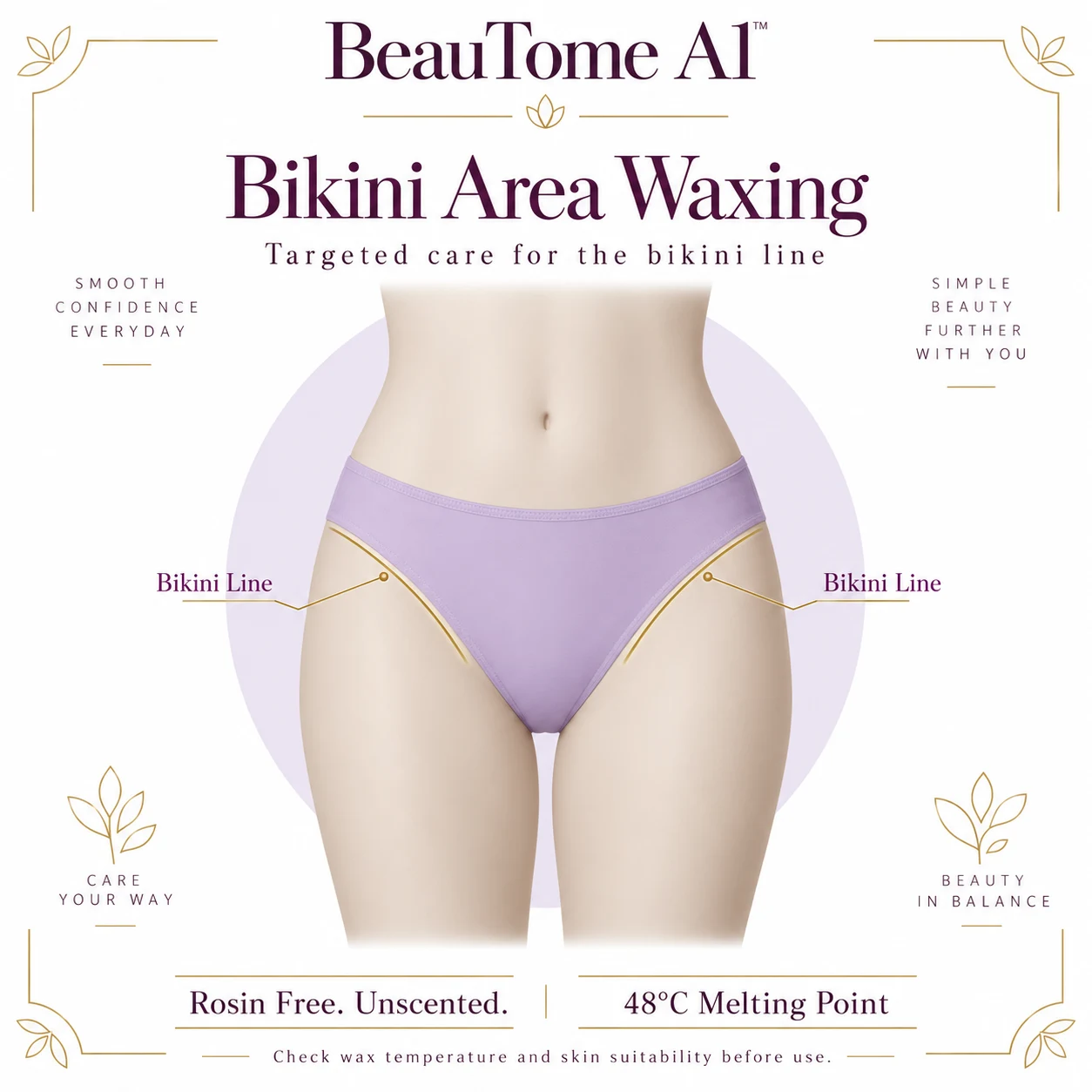
Bikini-area waxing: assess control on smaller sections, performance on the intended hair type and the operator’s working window. Specify whether the service brief covers the external bikini line or a broader professional service; do not use “bikini” as a blanket instruction for every intimate area.
Other body areas: the product information covers fine and coarse body hair. Buyers should still evaluate the chosen variant on their actual service mix. A fast-forming film may be helpful for small sections, but the approximate 6–8-second reference is not a timer that overrides the operator’s assessment.
Sensitive areas and sensitive skin describe different things. AAD advises against waxing sunburned or very sensitive skin and flags retinoid use as relevant to facial waxing. Those client-screening considerations remain important with a rosin-free formula. Its general guidance is not an A1-specific application protocol. Read the dermatology guidance.
Rosin-free, unscented and hypoallergenic: different claims
Rosin-free describes a formulation choice; it does not mean that no ingredient can cause a reaction. Likewise, “unscented” should not be expanded into “fragrance-free” without checking the formula and the intended market’s label requirements.
A1 is positioned for buyers seeking a low-allergen formula concept. Before putting “hypoallergenic” on packaging or a distributor’s product page, request finished-product evidence that supports the exact claim and variant. No such test result is presented in this article. In the United States, the FDA notes that there is no federal standard or definition governing the term “hypoallergenic.” The word itself is not a safety certification. FDA: “Hypoallergenic” Cosmetics.
A clear starting description is: “Unscented, rosin-free hard wax with a supplier-specified melting range of 48–50°C, intended for professional facial and bikini-area waxing, subject to product instructions and client suitability.” Claims such as “no burns,” “allergy-free” or “safe for all sensitive skin” go beyond the information available here. For more formulation background, read our complete guide to rosin-free hard wax.
How does A1 relate to the market direction?
MarketLensIQ’s public hair removal wax market overview identifies hard wax as a leading segment within its analysis and discusses smaller sensitive-area services, low-temperature formulas and online sales. These themes support a buyer brief focused on application control and clear product information.
However, its low-temperature discussion gives a 38–45°C range, different from A1’s declared 48–50°C. The report is market context, not testing or endorsement of A1. BeauTome’s interpretation is that A1 addresses related purchasing priorities; the report does not establish product performance or demand for this specific SKU.
What should brands and distributors confirm before launch?
A strong sourcing brief turns product features into information that trainers, retail teams and customers can use consistently. For A1, confirm these five items before approving a specification or label:
- Formula identity: the final ingredient declaration, colour variant, fragrance status and formula version. Ensure the sample and order refer to the same product.
- Temperature documentation: the melting-range test definition, heating procedure and application instructions. Keep heater settings separate from product specifications.
- Service fit: define the facial, external bikini or body-area services to be evaluated and the operator training required.
- Claim support: obtain evidence for any finished-product tolerance claim before approving “hypoallergenic,” comparative comfort or similar wording.
- Commercial pack information: agree the pack size, label, traceability details and target-market documentation for the chosen variant.
For the next step, use our controlled salon trial guide to record conditions and observations across samples. Keep any initial performance conclusions tied to those conditions instead of turning a single successful service into a universal claim.
Frequently asked questions
Is 48–50°C the recommended temperature for applying A1?
No. It is the current supplier-specified melting range. Application requires the product instructions, appropriate temperature checks and professional judgement; the melting range alone does not define a safe skin-contact temperature.
Can rosin-free hard wax still cause a reaction?
Yes. Removing rosin does not establish that the complete formula is suitable for every person. Review ingredients, relevant client history and the final product instructions. “Rosin-free” is not an allergy-free guarantee.
Is A1 suitable for facial and bikini services?
Those are intended professional applications in A1’s current product positioning. Confirm the exact treatment area, chosen variant and client suitability. Do not interpret sensitive-area positioning as permission to wax compromised or very sensitive skin.
Does the film always form in 6–8 seconds?
No. The approximate range comes from current product information. Thickness, room conditions and technique affect film formation; operators must assess readiness according to the instructions.
Discuss A1 for your professional waxing range
Share your target market, treatment areas, preferred colour and pack size with BeauTome. Request an A1 sample and the current product documentation so your team can assess the formula, application behaviour and label wording together. You can also explore our hard wax range to compare product options.
Sources and evidence scope
- BeauTome A1 product information, reviewed October 5, 2026: supplier specifications and intended applications; not an independent clinical study. The latest supplier brief gives the melting range as 48–50°C.
- American Academy of Dermatology — Hair removal: How to wax: general temperature and skin-screening precautions, not validation of A1.
- U.S. FDA — “Hypoallergenic” Cosmetics: U.S. terminology context.
- MarketLensIQ — Hair Removal Wax Market: publisher’s qualitative market overview, accessed October 5, 2026. Its estimates and methodology have not been independently verified here.